
OPENING THEORY: THE RETI
A comprehensive guide to the Reti Opening
OPENING
4/23/20264 min read
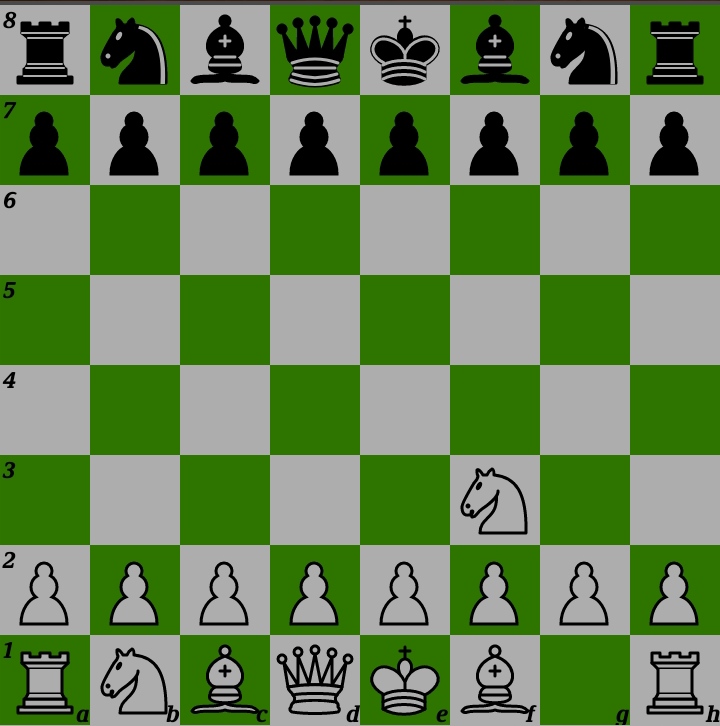
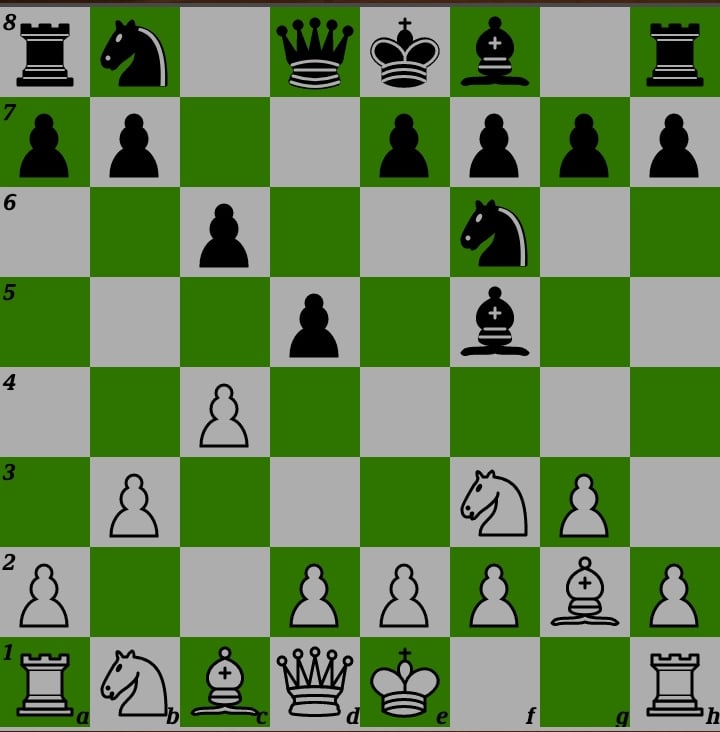
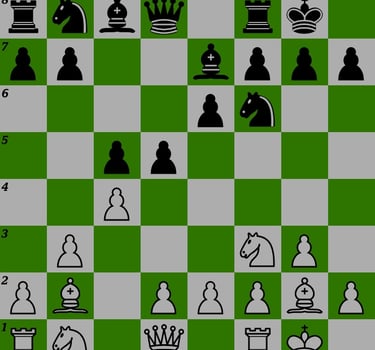
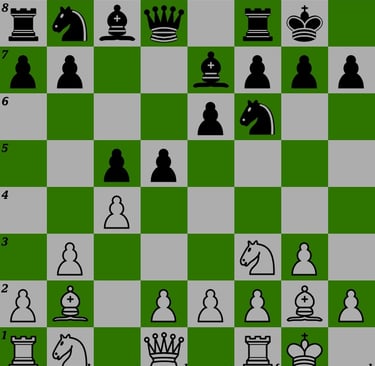
How to play the ‘Réti Opening’ To give you some general guidelines on how to play the ‘Réti Opening’, let’s look at some important typical positions. However, they can only show some of the regularly occurring essential possibilities, as it always depends on the specific circumstances, which approach is the best or the most appropriate.
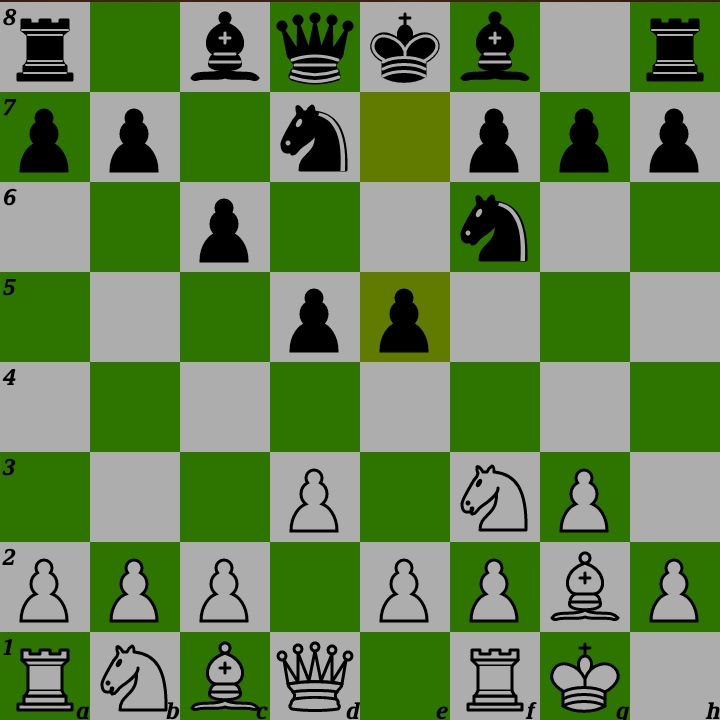
EXAMPLE 1:
Black has built a strong pawn center and White has to keep it under control before he can attack it sooner or later. In the given position, he will do so by applying the lever e2-e4.
EXAMPLE 2:
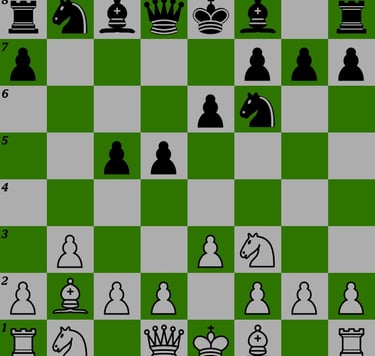
Here, Black’s strong pawn center looks different, since the c-pawn has advanced two squares while the epawn has been held back. Furthermore, White has chosen a different fianchetto. The attack on the opposing center will be carried out with c2- c4
EXAMPLE 3:
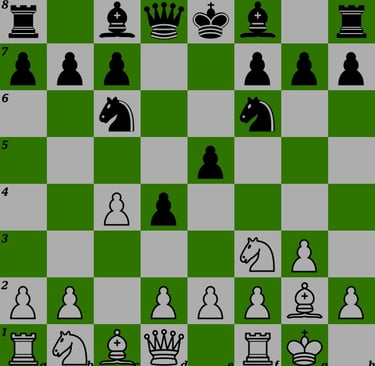
In this position, Black has released the central tension by pushing the dpawn to d4. After the stabilizing move d2-d3, White will attack the opposing center with the lever e2-e3.
EXAMPLE 4:
Here, White has chosen a double fianchetto in order to maximize the central influence of both bishops. Furthermore, the attack move c2-c4 has already been executed. Depending on whether Black sooner or later pushes his d-pawn, White chooses the appropriate countermeasures. If Black keeps the d-pawn in place, he will continue his development with d2-d3, ¤b1-d2, e2-e3 etc. - and if it advances to d4, he will either attack it with e2-e3 or become active on the queen side with a2-a3 and b3-b4.
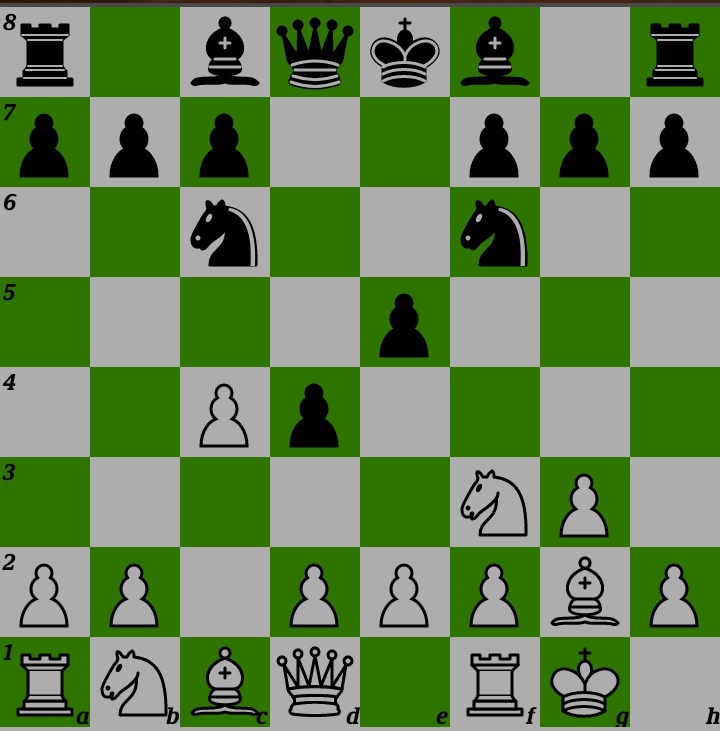
EXAMPLE 5:
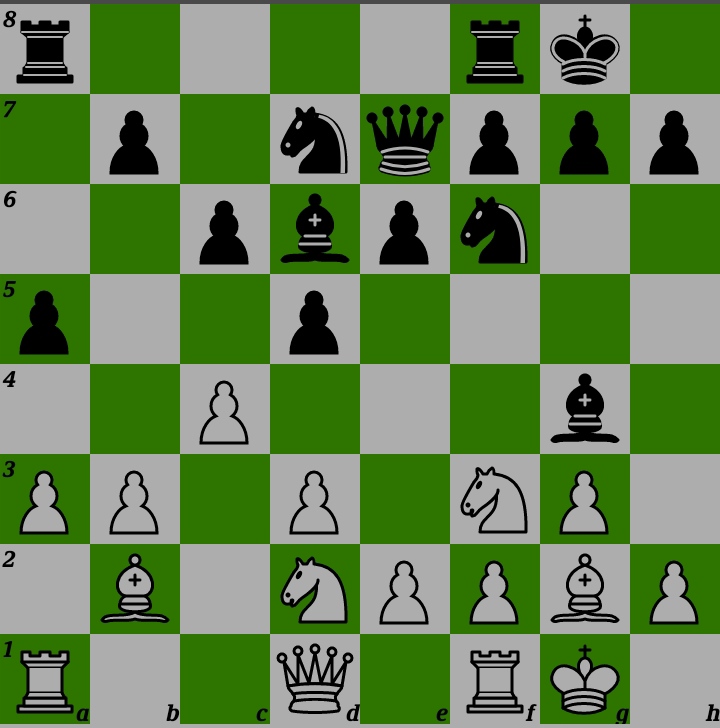
This position is characterized by the fact that Black’s queen bishop operates outside the pawn chain (alternatively it could also stand on g4). Black will put his e-pawn on e6 for the time being and only later try to push it to e5.
EXAMPLE 6:
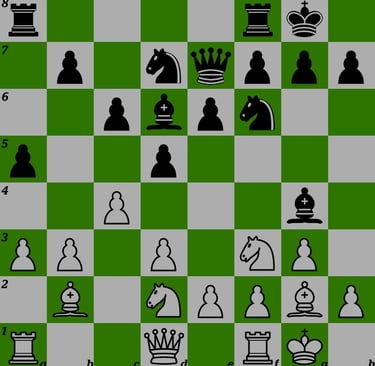
This position shows an example of which shape the previous one might take. Both sides still have to develop their heavy pieces. Meanwhile, further significant pawn moves are not to be expected in the near future.
INTRODUCTION
1.Nf3............This opening was introduced in tournament practice almost one century ago by the extraordinary Hungarian Grandmaster Richard Réti, who was one of the pioneers of the so-called ‘Hypermodern School’. One of its revolutionary ideas was a completely different approach to the treatment of the center. Instead of occupying it with pawns (i.e. in the classic manner), the bishops were developed to the flanks (by means of a so-called ‘fianchetto’) in order to build up piece pressure on the center. If White chooses the ‘Réti Opening’, he allows his opponent to occupy the center with pawns - and then attacks these pawns with the appropriate levers. In many cases the close relationship of the ‘Réti Opening’ with other openings becomes apparent - for example with the ‘King’s Indian Defense’, the ‘English Opening’ and many others.
1.Nf3,d5............This is the most popular reply, although Black has many alternatives given White’s restrained approach - like e.g. 1...Nf6, 1...c5 etc. However, they will mostly lead to the main line or to one of the sidelines by transposition of moves.
2.c4 This is the original form of the Réti Opening. White immediately attacks the opposing center pawn. The other options that prepare a fianchetto with either 2.g3 or 2.b3.
However, these two moves can also lead to other lines by transposition of moves. At this early stage of the game it can happen very often, that different move orders lead to the same positions. Of course, if White plays d2-d4 here or in one of the next moves, this would lead to the Queen’s Gambit, which is not a subject of this section.
The basic ideas are explained in the following paragraph.
A1) If Black chooses a set-up with the fianchetto of the king bishop, the game can take the following course. 5...g6 6.Na3 Nb6 7.Qc2 Bg7 (Black can try to defend his extra pawn with 7...Qd5!?, but after the example line 8.b3 cxb3 9.axb3 Bg7 10.e4 Qh5 11.d4 Bh3 12.Nc4, White has obtained a very active position.) 8.Nxc4 Nxc4 9.Qxc4 Nf6 10.d3 (After 10.b4 a5 11.b5 Qd5, Black has no problems.) 10...0–0 11.Bd2 (In the game Wen - Shulman, Ningbo 2013, White played 11.Qh4, and Black tried to exploit the opposing queen’s absence from the queen side. 11...Qb6 12.Rb1 Be6 13.b3 Qa5 14.a4 Bg4 Black wants to clarify the situation on the Kingside. d2 Qh5 16.Qxh5 Bxh5 17.h3 Bxf3 18.Bxf3 Rfd8 19.b4 a6 20.Rfc1 Nd5 21.h4 h5 22.Kf1 Rac8 23.b5 White has an advantage and went on to win. Although there should be the one or other improvement for Black after 11.Qh4, the basic idea deserves more practical tests.) 11...Qh5 12.Rab1 a5 13.Bc3 To give up the bishop pair is probably not advisable in the given position. (13.a3!? followed by e2–e4 and only then Bd2–c3 etc. came into consideration.) 13...Nxc3 14.bxc3 a4 15.Qb4 a3 16.Rfc1 Ra6 17.Nd2 Bc7 18.Rb3 Qd6 19.Rc2 Rd8 20.Qxd6 exd6.
EXAMPLE IMAGE 1
EXAMPLE IMAGE 2
EXAMPLE IMAGE 3
EXAMPLE IMAGE 4
EXAMPLE IMAGE 5
EXAMPLE IMAGE 6