
SCROLL DOWN
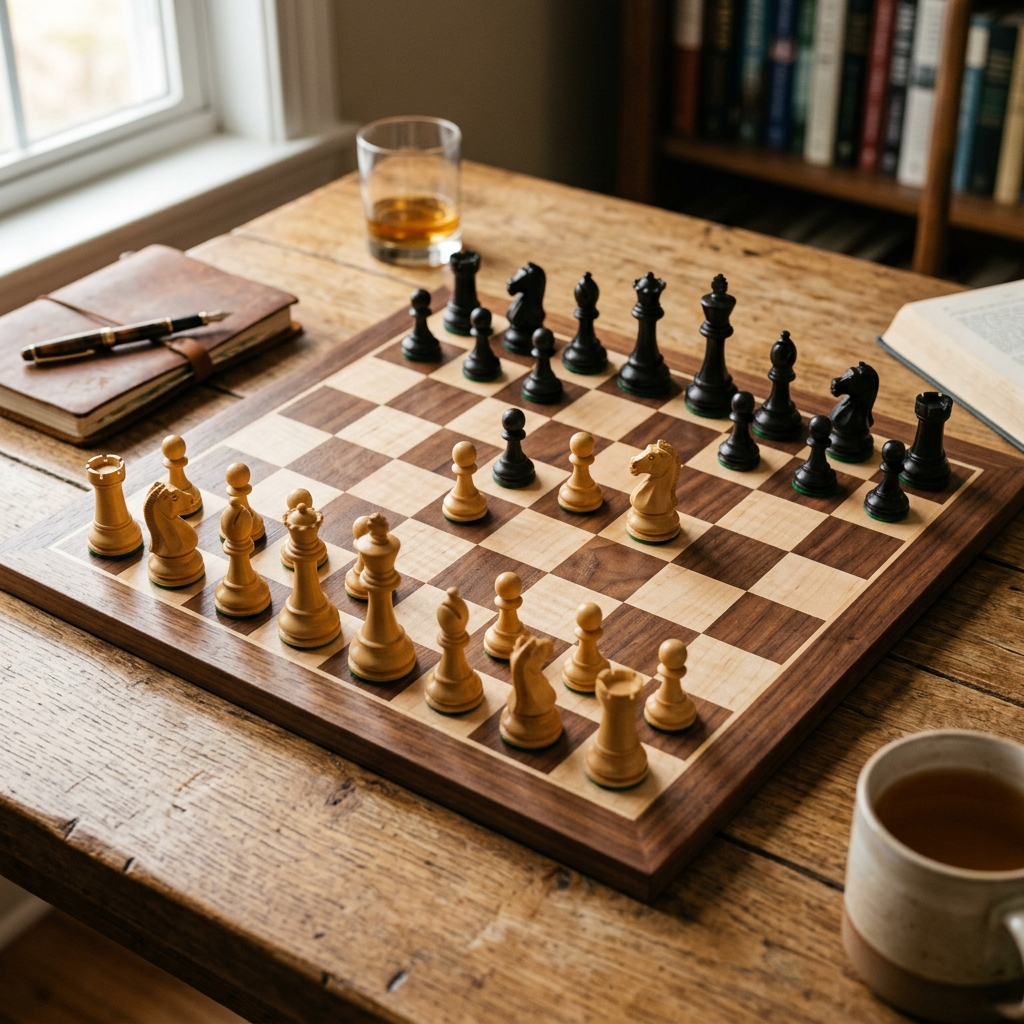
THIS IS HOW
A CHESS BOARD
LOOK LIKE
THINGS TO REMEMBER
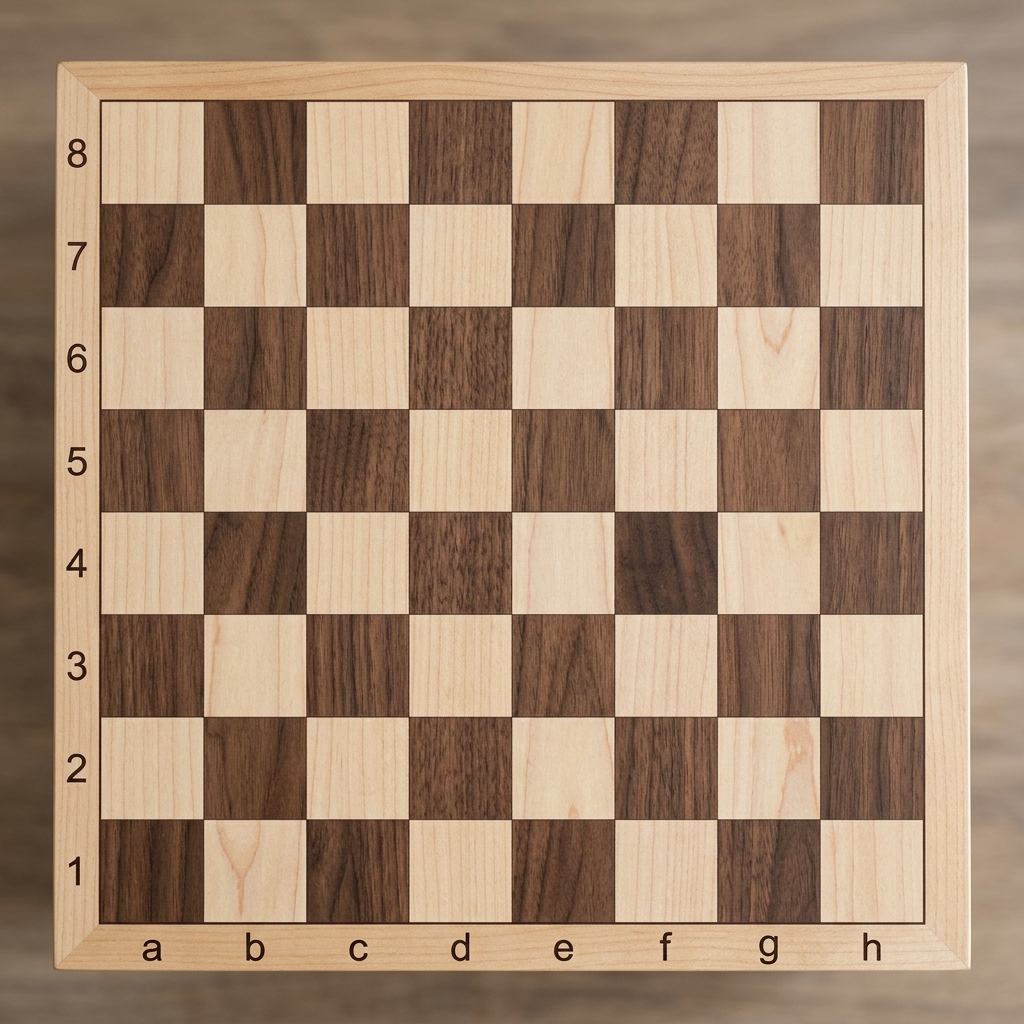
- The board has 64 squares (8×8)
- 32 light squares and 32 dark squares
- The board is labeled with letters (a–h) and numbers (1–8)
- Horizontal rows (1–8) are called ranks
- Vertical columns (a–h) are called files
LET'S LOOK AT THE PIECES
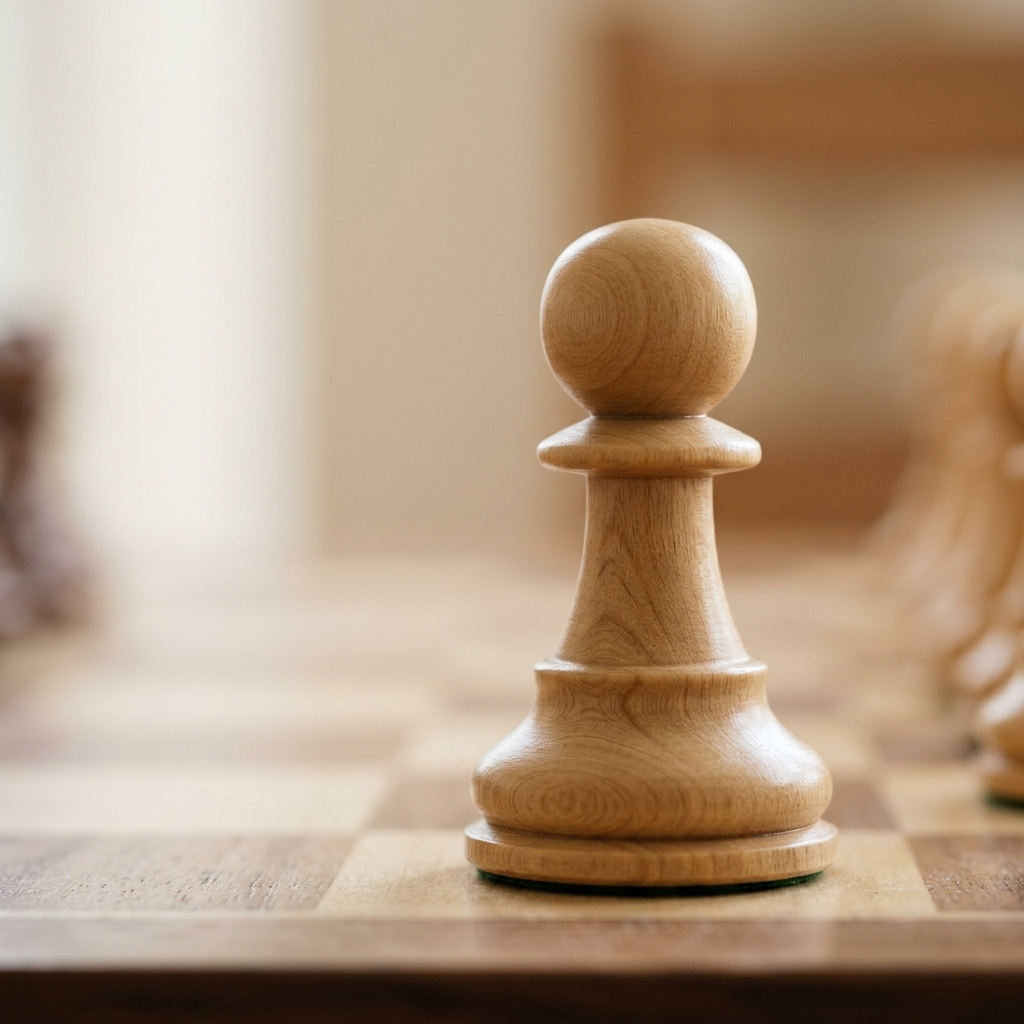
PAWN
KNIGHT
BISHOP
ROOK
QUEEN
KING
LET'S START WITH PAWN
ATTACK BY THE PAWN
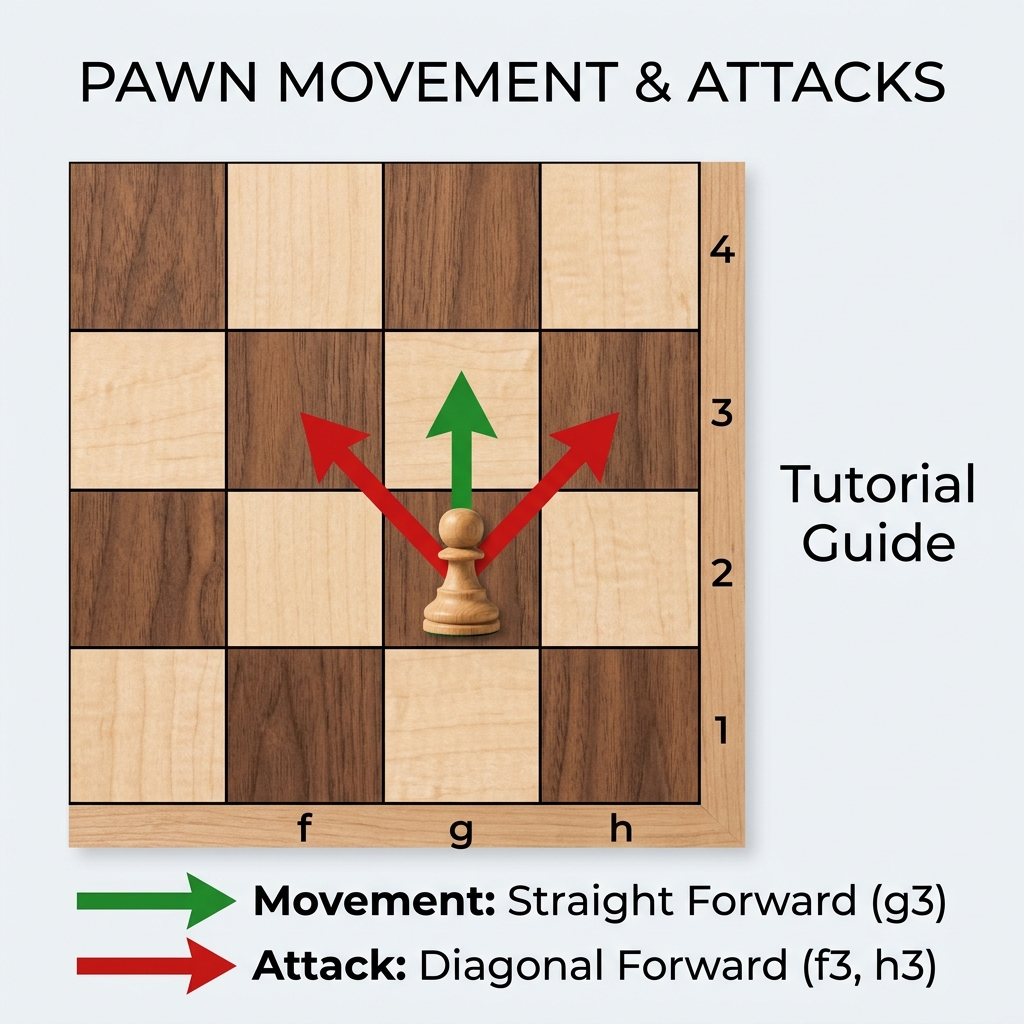
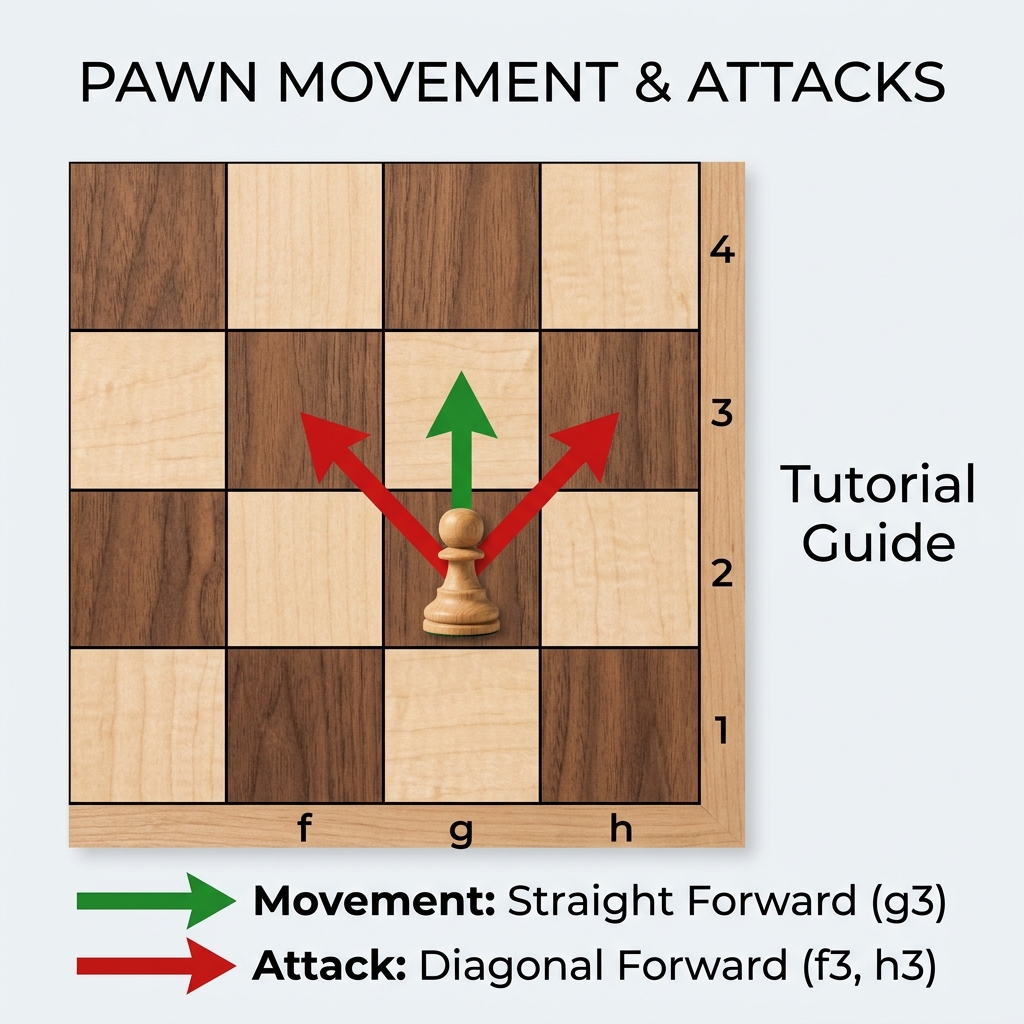
MOVEMENT
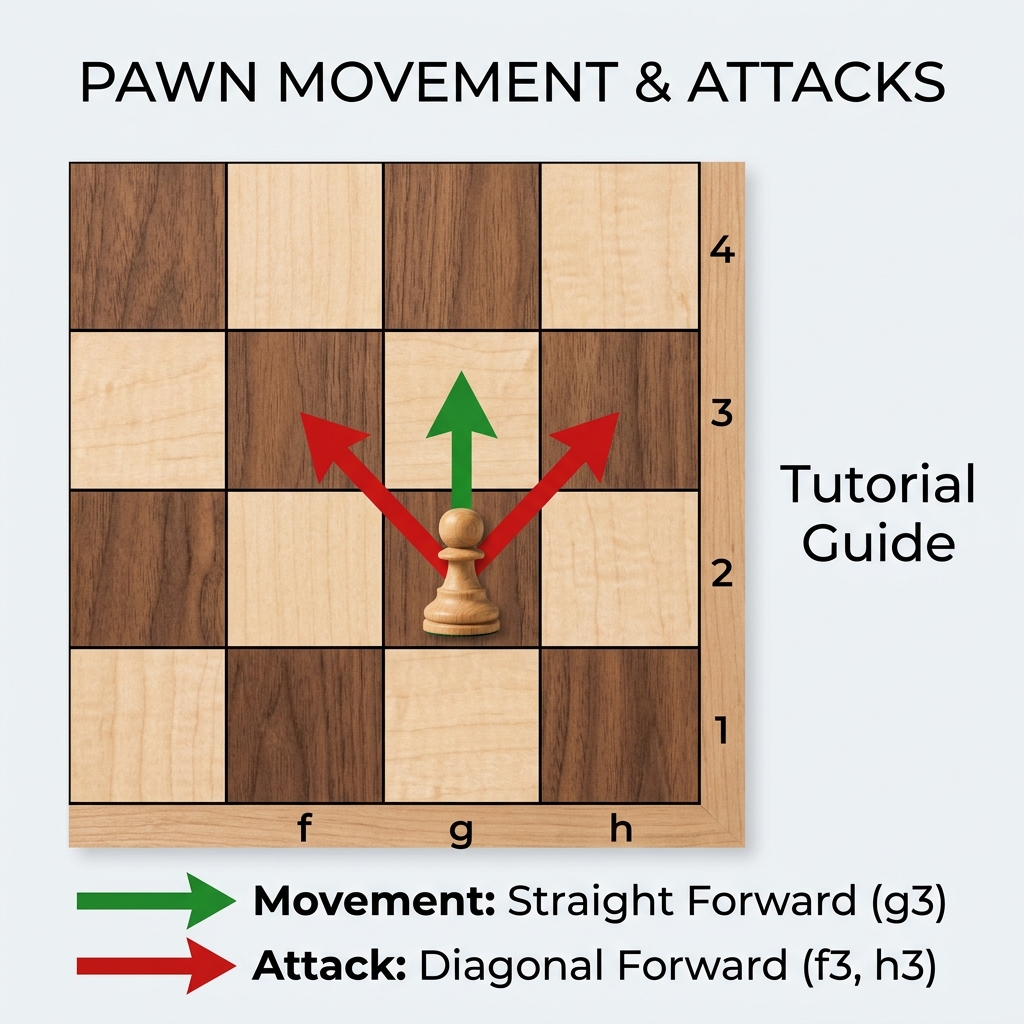
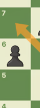
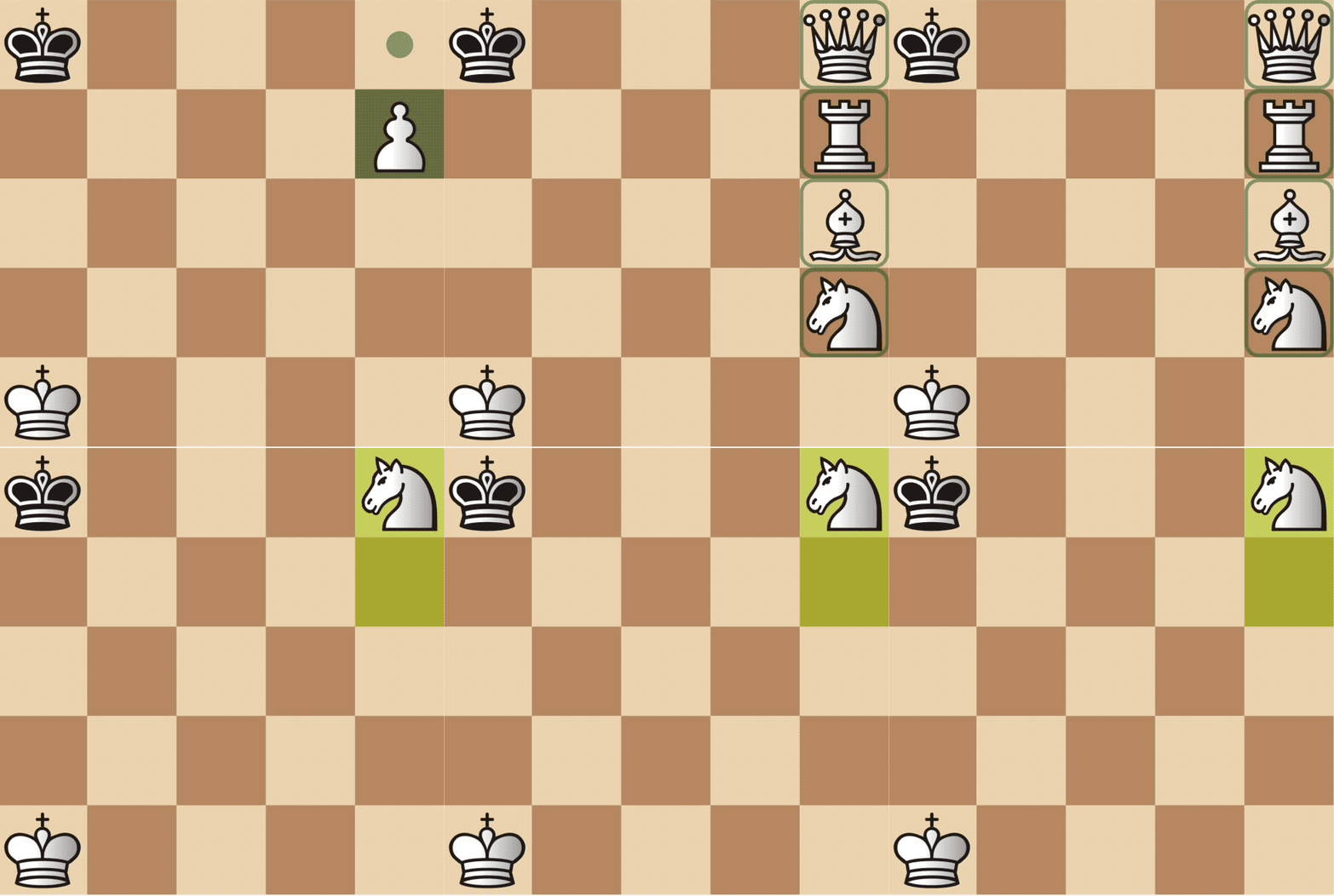
Pawns in chess move straight forward one square at a time, but can move two squares on their first move. Also, pawns capture one square diagonally.
- A pawn moves straight forward only.
- It moves 1 square forward normally.
- On its first move, it can move 2 squares forward.
- It cannot move sideways or backward.
- It cannot move forward if a piece is blocking the square in front of it.
When a pawn reaches the opposite end of the board, it must be replaced with a piece other than the king as per the player's choice.
NEXT LET'S LEARN ABOUT KNIGHT
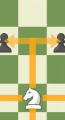
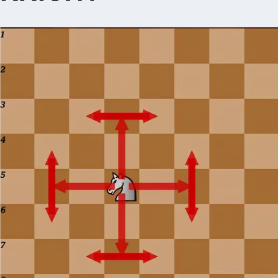
Knights in chess are the most unique. They move in an 'L' shape in all directions (two squares in one direction and one square to the side). This peculiar movement allows them to basically jump over pieces.
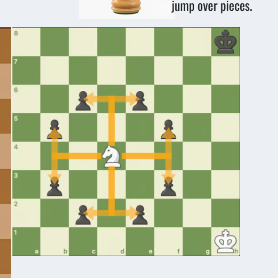
BISHOP
Bishops in chess move along diagonals. The dark square Bishops remain in dark squares while the light square Bishops remain in light squares.
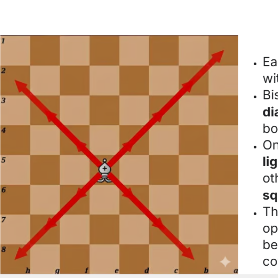
- Each player starts with two bishops.
- Bishops move diagonally across the board.
- One bishop stays on light squares, the other on dark squares.
- They are powerful in open positions because they can cover long distances.
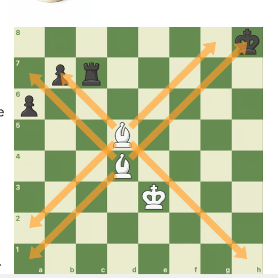
ROOKS

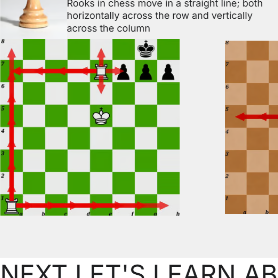
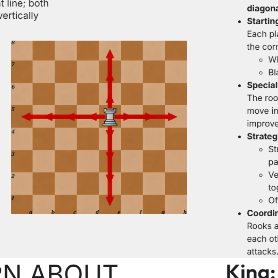
Rooks in chess move in a straight line; both horizontally across the row and vertically across the column.
- Strong on open files (columns with no pawns)
- Very effective when connected (working together)
- Often dominates in the endgame
NEXT LET'S LEARN ABOUT KING

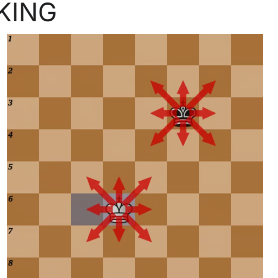
It is the most important yet one of the weakest pieces. A king can move in all directions but only one square at a time.
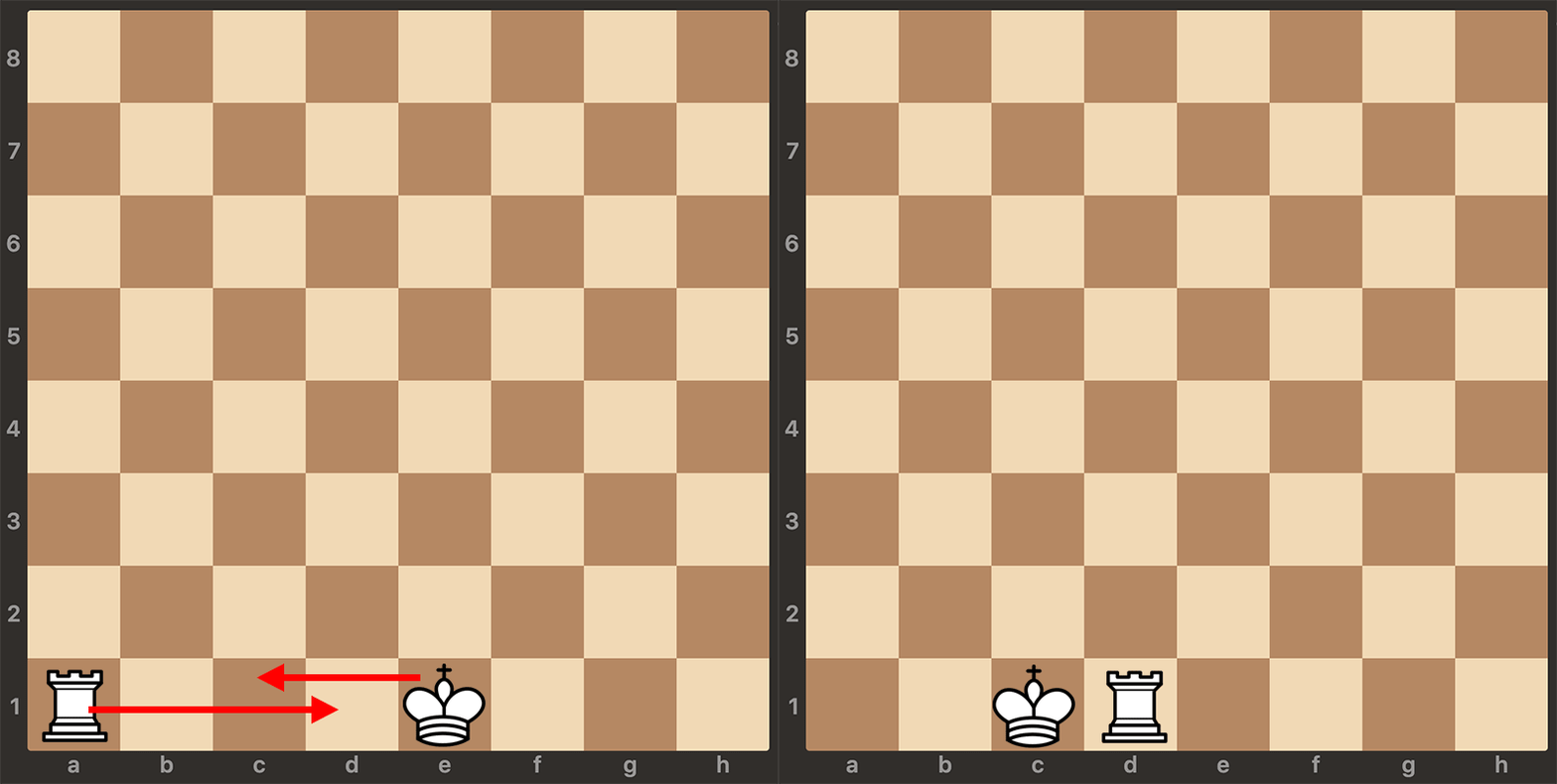
However, a king has a special move called 'Castling'. A king can castle if the following conditions are met:
- The king is not moved yet from its starting position.
- One of the Rooks is not moved from its original position.
If these two conditions are met then the king can move two squares to the right or three squares to the left. Also, after castling, the rook towards which the king castles comes to the other side of the king.
QUEEN
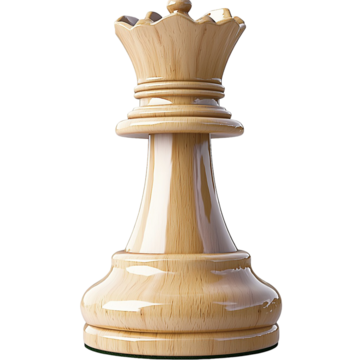
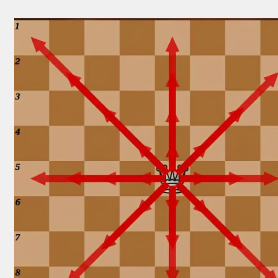
The Queen in chess is the most powerful piece. It moves in all directions across diagonals, rows and columns. It basically combines the movement of both Rooks and Bishops.
- Strong in attacks and checkmates
- Controls large areas of the board
- Often used to support other pieces
Special Moves
Special Move: Castling
Castling is the only move that lets you get two pieces off the board in one turn. When you castle, the king scoots two spaces toward the rook it’s going to castle with, and the rook hops over to the other side. The king can castle on either side as long as:
1. The king hasn’t moved yet.
2. The king isn't in check.
3. The king doesn’t slide through or into check.
4. There’s nothing in between the king and the rook on the side you want to castle.
5. The rook you’re castling with hasn’t moved yet.
What doesn’t matter:
A. If the king was in check but isn’t anymore.
B. If the rook can get attacked by an opponent's piece before you castle.
Special Move: En Passant
En-Passant: En-Passant is a very special type of move made by the pawn. It requires specific circumstances. They are:
1. A white pawn is in the 5th rank, or a Black pawn is in the 4th rank.
2. An opposite colour pawn moves two squares from the initial position in such manner that if it had moved one square than the other pawn could have captured it.
In such circumstances, a pawn can capture the enemy pawn as if it moved one square instead of two. However, this move must be played immediately after the pawn is moved two squares. Else it will become an illegal move.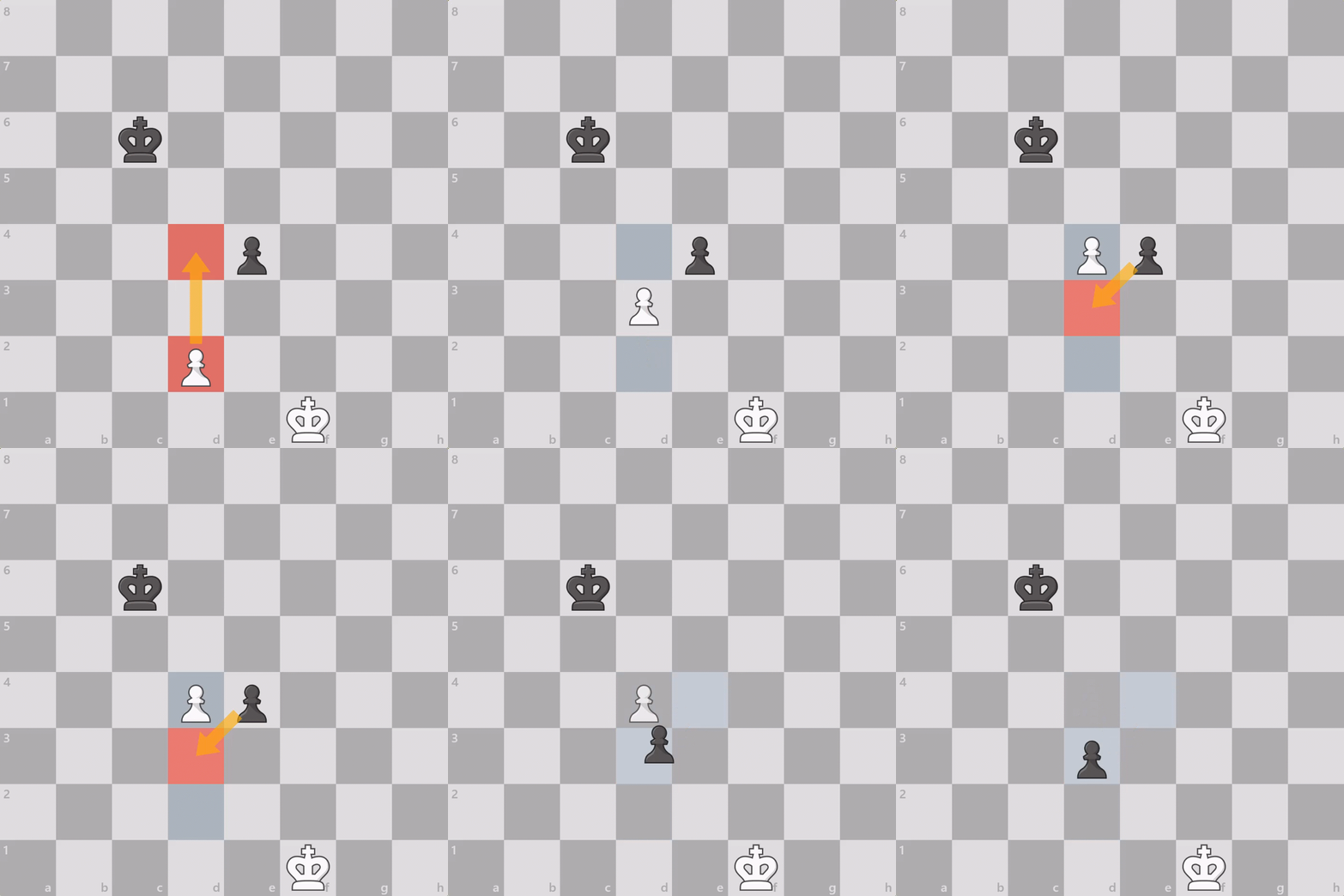
Check, Checkmate & Stalemate
Check
Check (in chess) is a situation where the king is under attack by an opponent’s piece. When a king is in check, the player must remove the check immediately by: moving the king, blocking the check, or capturing the attacking piece.
Checkmate
Checkmate is how you win a game of chess. It happens when your opponent’s king is in check, and there is no way to escape. The king cannot move to any safe square, the attacking piece cannot be captured, and the attack cannot be blocked. The king is trapped, and the game is over.
Stalemate
Stalemate (in chess) is a situation where the player to move is not in check, but the player has no legal moves. The game ends in a draw. For example: If the king cannot move anywhere without going into check, and no other pieces can move, but the king is not currently in check, then it is stalemate.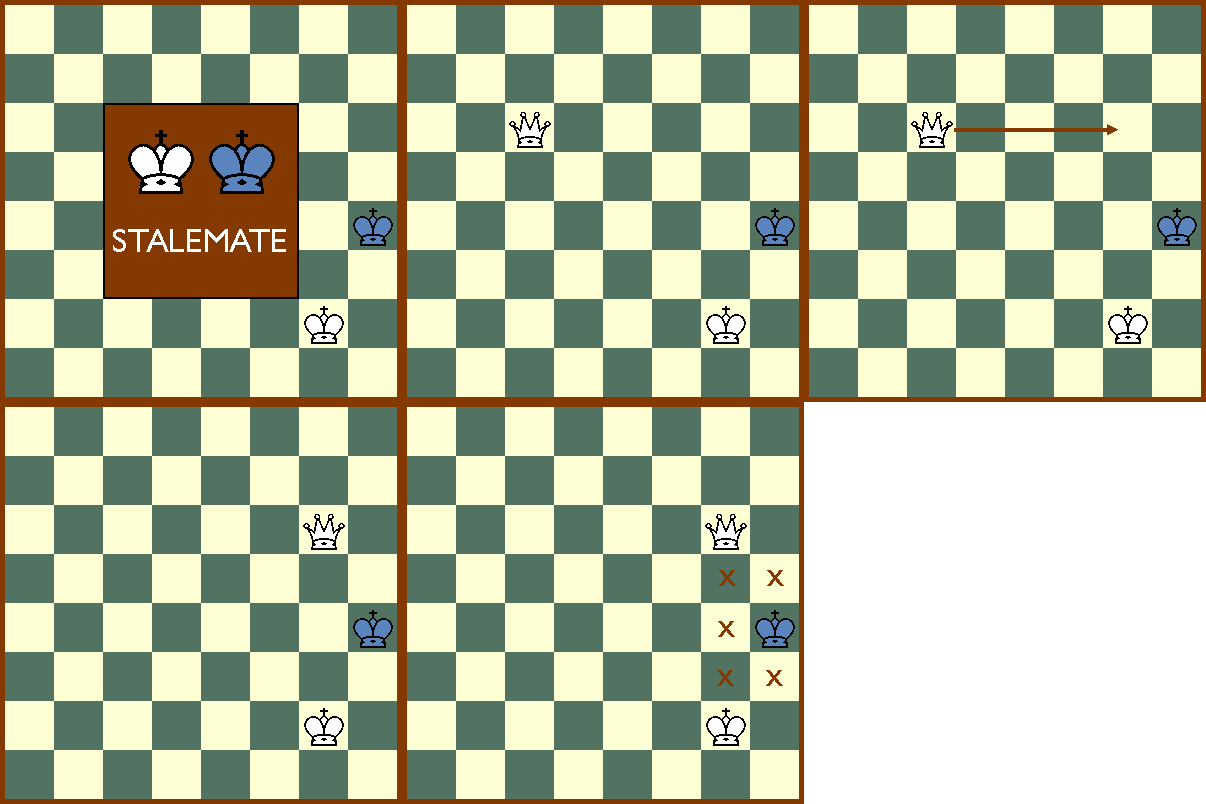
Basic Strategy and Principles
In order to be able to checkmate the opponent king, we must first pass through many intermediate stages.
ACTIVITY IS EVERYTHING
At the start, we must try to make our pieces as active as possible.
1. This usually translates to putting our pawns in the centre and defending them with our pieces.
2. Later, we can advance our pawns and put our pieces in the centre for active play.
PROTECT OWN KING
We must protect our own king at the same time as trying to checkmate our opponent.
1. The most important step for protecting the king is castling our king. This also activates the Rook.
2. Making sure our own king is not under any threat before proceeding a move is important.
EVALUATION OF POSITION
We need to constantly evaluate the position after every move. Observe:
1. Whose King is more safe.
2. Who has more material.
3. Whose piece activity is more.
The value of each changes depending on the position.
Go Play Some Games
WHITE WINS THE GAME IN THIS ILLUSTRATION
Play Now