
OPENING:
EVERY GOOD GAME OF CHESS BEGINS WITH A GOOD OPENING. If the opening is not properly played, the player will face many consequences in the Middlegame and Endgame.
HOWEVER, in most cases a beginner should not try to play openings that require very in depth knowledge to maintain a position. That is also the the reason why many coaches often discourage beginners from playing openings like The Sicilian or The Grunfeld. In this section, we will thus discuss a rather simple and flexible opening- THE LONDON SYSTEM.
The London can be played by either White or Black( called Reverse London). Let's get into it.
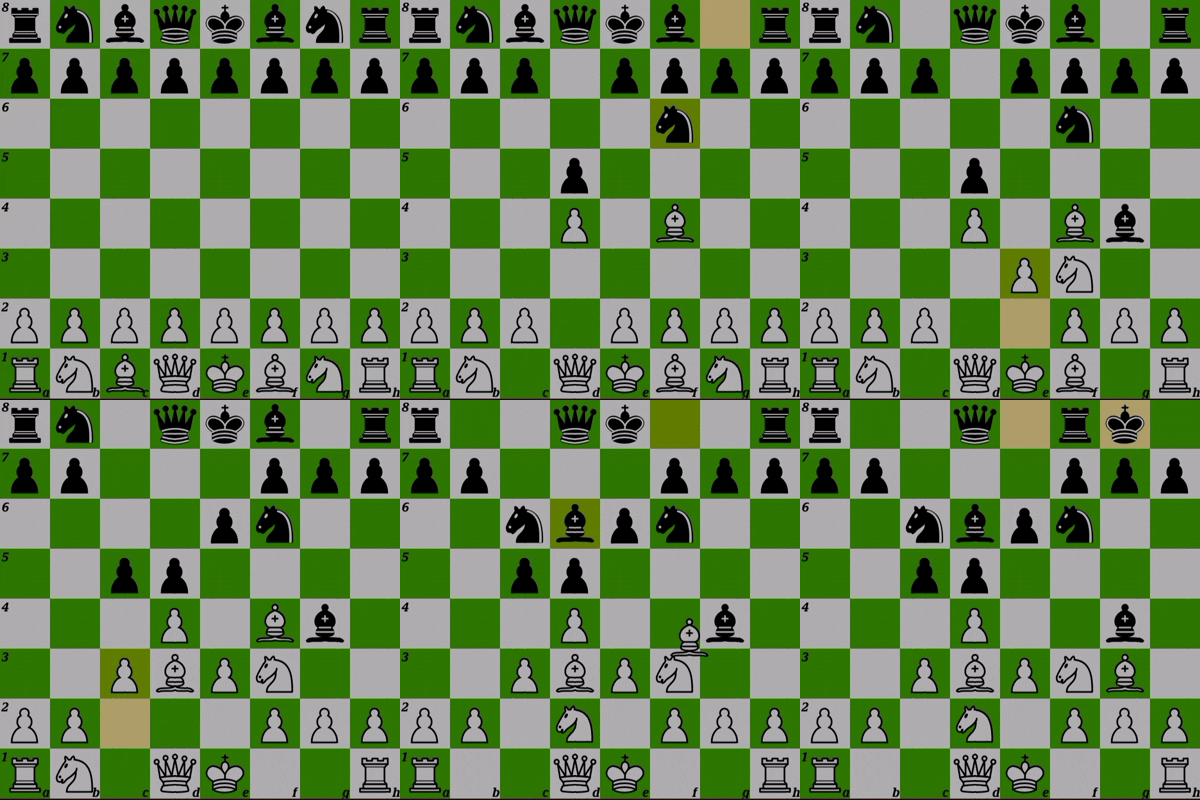
The London for white typically begins with the move d4.This is the simplest approach and the same can also be played with first moves like Nf3. However, these other approaches may lead to other lines and skip the London completely.
The most common response by black is d5. Although, moves like Nf6 are also very common to see. Other responses include g6,b6,e5,c5 etc.
Our plan against d5, Nf6, e6 or g6 is very similar.
WE PLAY THE MOVES Bf4, Nbd2, Nf3, e3, Bd3 etc in varying order depending on the play by our opponent. Of course, this is assuming that our opponent plays rational development moves. we must be conscious of the fact that if our opponent plays irrational moves(like h5 or a6 immediately after Bf4,our play will change according to such moves. There is no fixed opening theory against such moves and have to be figured out by logic and experience.
In the typical course of events, the move c5 is often seen being played by black. In most cases be met by c3 immediately after. Moreover, the Bishops often face each other on d3 and f5 ,or on f4 and d6. In such situation, we can choose to trade the Bishops or retrieve our dark square Bishop to the g-file.
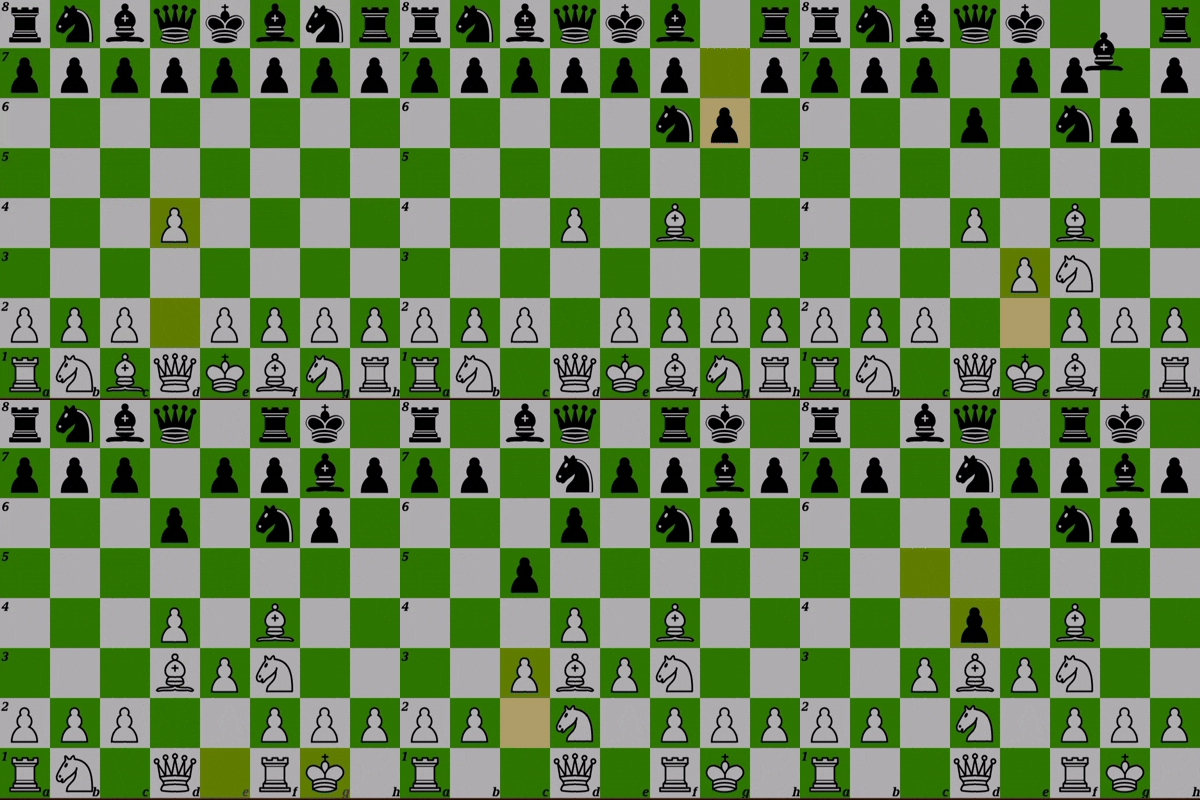
EXPLAINATION:
The reasoning behind each move in the London system is very simple. We play moves like Bf4 and d4 to gain meaningful control over the e5 square. Moves like Nf3 too support the e5 square. This Knight can also later jump into the e5 as will as the g5 square if the opportunity presents itself. Moves like e3 too directly support the centre. This creates the possibility of a weak square on e4......which we strengthen by move like Nb2 and Bd3. Nbd2 also supports the f3 Knight and, even replace the f3 Knight in case our opponents decide to trade our knight for the Bishop with moves like Bg4 and Bxf3. We can further play moves like Qc2 or Qb3 as per the demands of the middlegame. We should also castle our King in the appropriate time arrives for our own safety. In most cases the king castles short but my castle long in a few circumstances when he kingside is very open and dynamic. We can later proceed with moves like Rac1 and f4 as well as trying to prepare and play e4 to gain a meaningful space advantage.
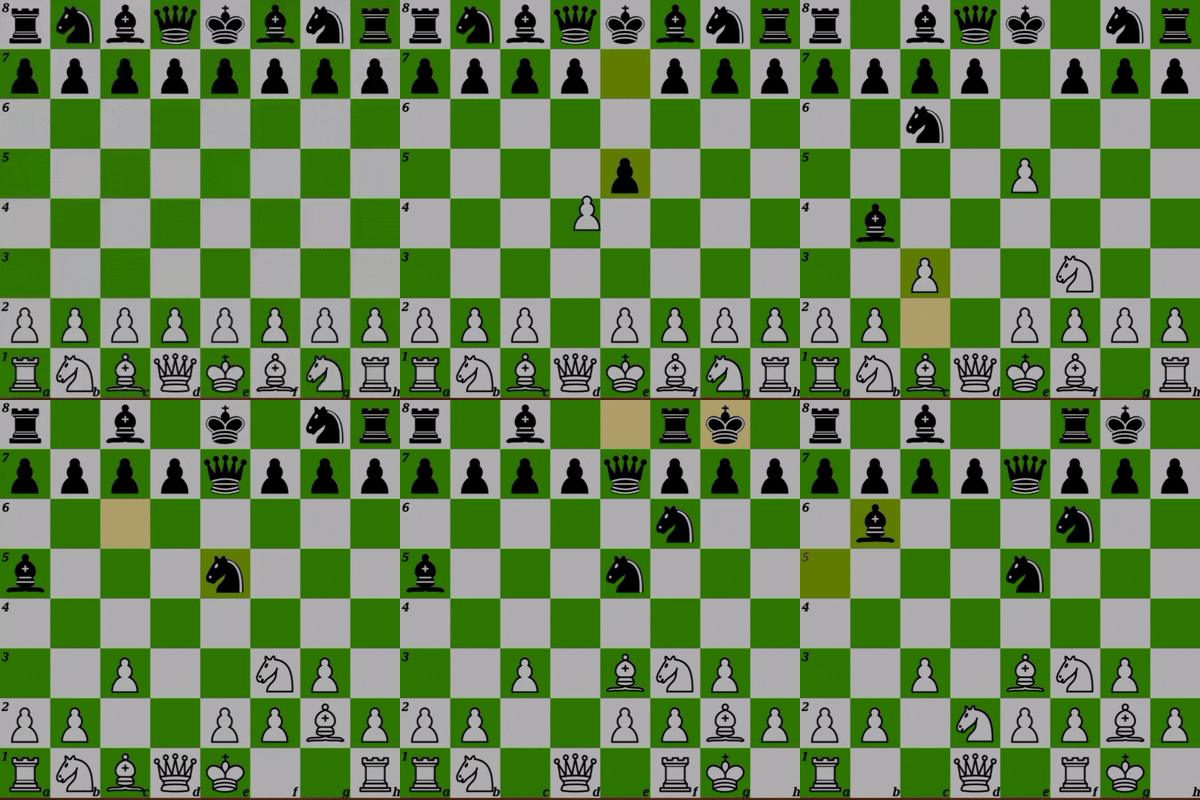
AGAINST e5:
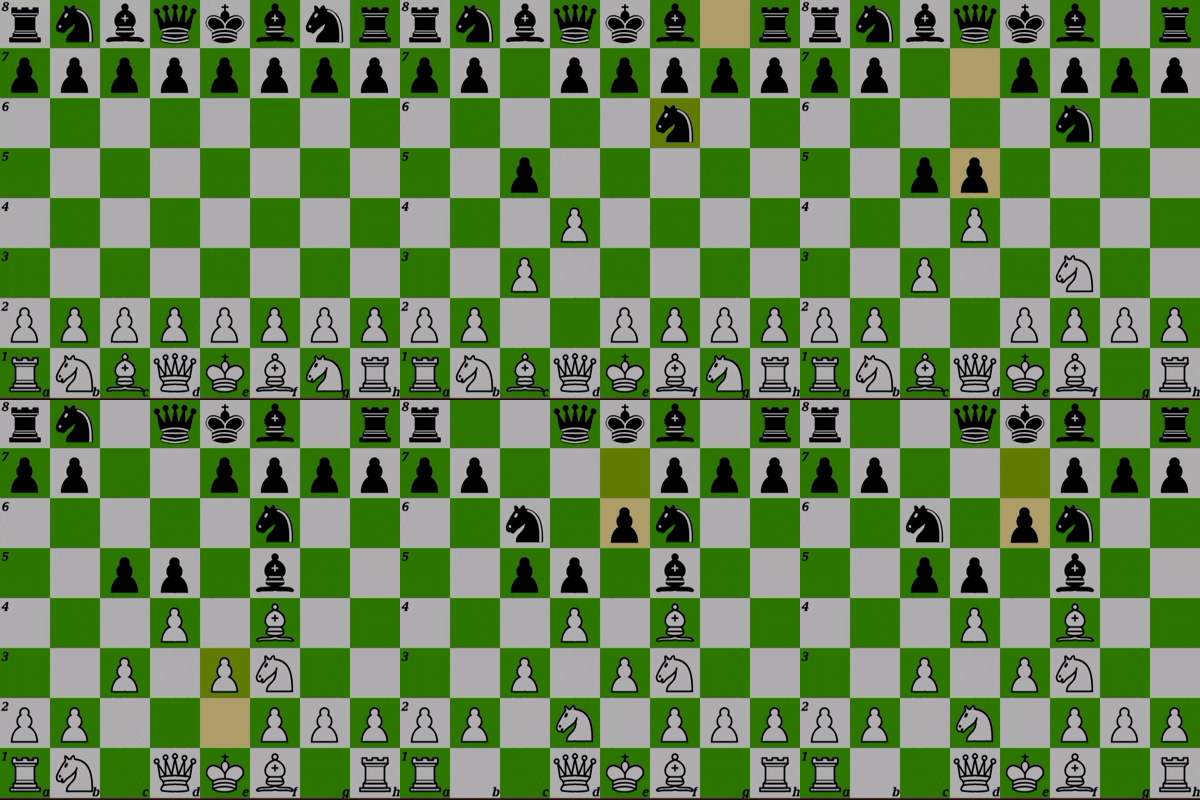
AGAINST c5:
We have many options against c5.......we can opt to play against a Benoni setup by playing d5 or, as I would personally recommend to beginners, play c3 and continue as usual without much hassle. However, it is important to know that taking the pawn is a a big mistake ,and black can easily exploit the position with aggressive queenside play.


REVERSE LONDON:(COMING SOON)
Although less common, another move we might face often is 1.d4,e5(The Englund Gambit). We can play c3 and continue the position but, IT IS TOO PASSIVE AND NOT PREFERABLE. Instead, I personally recommend 1.d4,e5 2.dxe5. However, we must be cautious of the infamous Englund Gambit Trap(1.d4,e5 2.dxe5,Nc6 3.Nf3,Qe7 4.Bf4,Qb4+), which leads to a completely lost position. We can instead play 4.Nc3,Nxe4 instead of the Bishop. We can then continue with moves like g3 and Bg3 as well as Be3 or Bg5. If our opponent plays Bb4+ or Bc5 instead of Qe7, we can play c3 and develop the Knight on d2 instead. We can later try a queenside expansion with moves like b4 and a4. However, we must be cautious as our opponent might try to undermine the expansion with moves like a5.